
No, this is not about Large Language Models!
While Large Language Models (LLMs) have become synonymous with breakthroughs in artificial intelligence, we invoke the acronym here to draw attention to a very different, yet equally consequential, phenomenon: Leadership Linear Mindsets. In an era where data is frequently likened to the “new oil” and hailed as a transformative asset for value creation, the reality within incumbent enterprises tells a more sobering story. Despite isolated success cases, a growing body of evidence points to the limited and often disappointing outcomes of digital transformation initiatives. This article (the first in a series of articles) critically examines how entrenched linear thinking among leadership teams functions as a structural impediment to realizing the full strategic potential of data.
Hype vs. Reality: The Quiet Struggles of User-Enterprises:
The discourse surrounding data as the “new oil” has underscored its potential to unlock unprecedented business value through advanced analytics, platform-based ecosystems, and AI-driven decision-making frameworks (Manyika et al., 2011; Brynjolfsson & McAfee, 2017). While a few high-profile technology providers, such as Google, Microsoft, Amazon, and Tesla, have clearly leveraged differentiated, information-centric capabilities to generate significant market outperformance, these examples are outliers rather than the norm. Their success stories, although compelling, are not representative of the broader enterprise experience.
In contrast, a growing body of empirical research points to a sobering reality for the vast majority of user-enterprises. Despite the increasing adoption of digital transformation programs, success rates remain alarmingly low. Kiron et al. (2016) observe that such successes tend to be anecdotal, while Westerman et al. (2014) and Fitzgerald et al. (2013) highlight the persistent underperformance of digital transformation outcomes, particularly among incumbent firms.
Quantitative evidence further substantiates this concern. According to a McKinsey Global report, although 89% of large companies worldwide are pursuing digital and AI transformation initiatives, they have realized only 31% of the anticipated revenue uplift and just 25% of the expected cost savings (McKinsey & Company, 2022). Similarly, a BCG study found that only 30% of digital transformations achieved or exceeded their target value and led to sustained organizational change (Forth et al., 2020).
Consistent with this evidence, only about one-third of digital transformation efforts are estimated to meet or exceed their intended objectives. Moreover, it is worth noting that companies often exhibit a natural reporting bias towards successes over failures. This intrinsic skew only amplifies the concern that if the known failure rate is this high, the actual rate may be worse. It is therefore not an exaggeration to conclude that, despite the promise and publicity, the realized benefits of digital transformation remain elusive for the majority of organizations.

Figure 1: Likelihood of Success in Digital Initiatives
Decoding the Disconnect: Value Realization Barriers in User-Enterprises
Here, “value realization” refers not only to near-term operating profit but also to the market’s recognition of a firm’s capacity to create and extract value from information-based capabilities over time. Investor valuation is therefore used as a leading indicator of this expected value-extraction potential—not as a claim that market prices are always precise.
Value realization from data is exponential in nature
The limited success rates of digital transformation initiatives can be better understood by examining the inherent characteristics of value creation through information-based capabilities. These capabilities typically follow an exponential value curve, which diverges significantly from the linear models familiar to traditional business planning and investment. Importantly, this exponential pattern should be interpreted prospectively from a given starting point, when a new capability or opportunity still has substantial unrealized potential. As that opportunity matures and the available upside is increasingly captured, incremental returns typically diminish and the trajectory becomes more linear. This prospective exponential dynamic is particularly relevant today for information-based capabilities enabled by data and AI.

Figure 2: Effort-to-Outcome Dynamics in Exponential Value Realization
Specifically, while the associated investments and efforts are often immediate and substantial, the realization of benefits tends to be deferred, emerging over longer time horizons than conventional business expectations typically accommodate. Furthermore, when outcomes do materialize, they are frequently of a magnitude that far exceeds standard business benchmarks. Figures 3 and 4 illustrate this phenomenon through examples. However, this outsized potential is coupled with elevated uncertainty; the probability of failure is notably higher than that of conventional initiatives, underscoring the high-risk, high-reward nature of digital transformation.
The three attributes, namely, substantial upfront investment, delayed realization of benefits, and high risk in outcomes, collectively define the exponential nature of digital transformation. A deeper understanding of this phenomenon can be developed through a comparative analysis of digitally native firms that have successfully operationalized data-centric strategies.
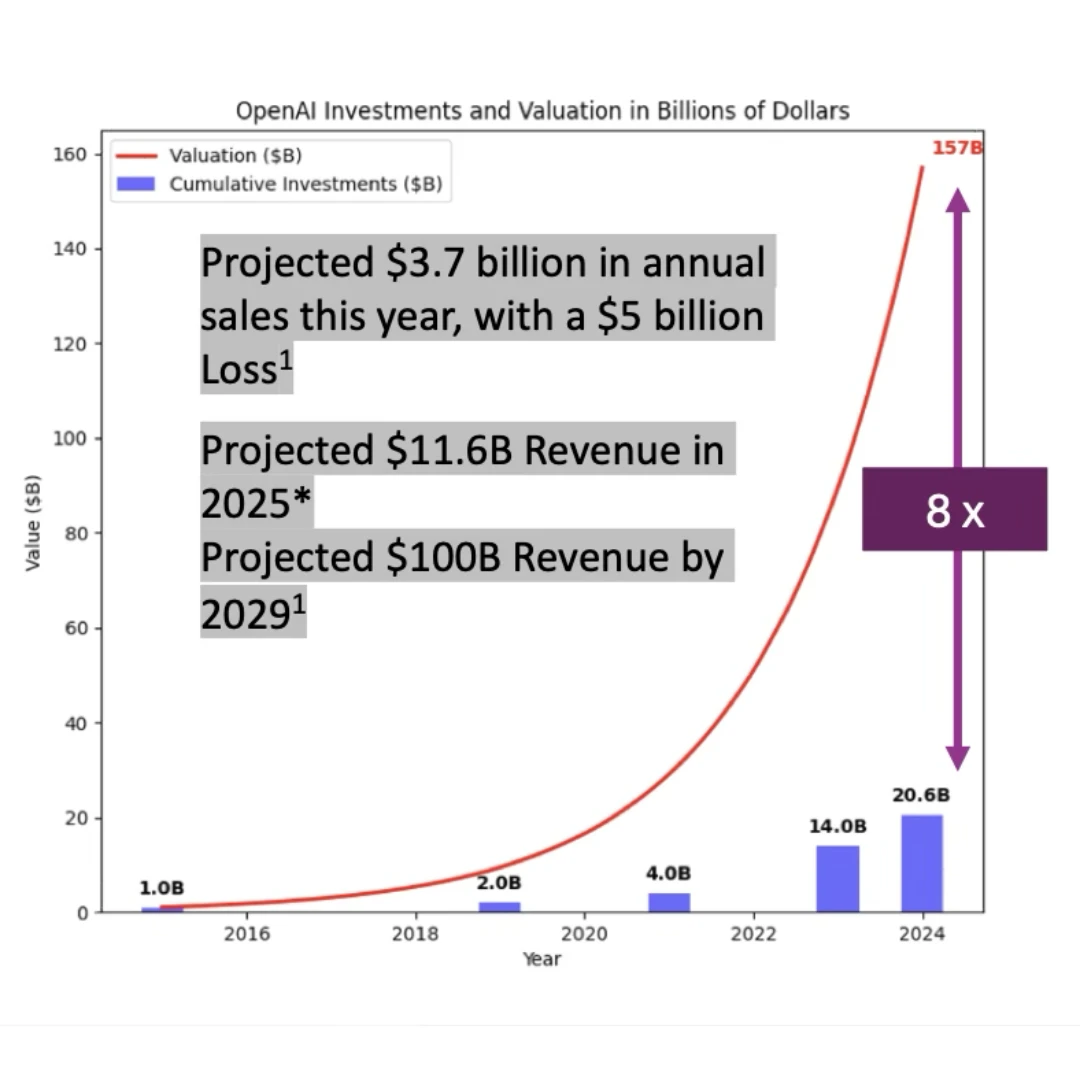
Figure 3: OpenAI: Investments and Valuation

Figure 4: Nvidia vs. S&P500 Growth Since 2019
This exponential nature of value creation is vividly illustrated through the growth trajectories of OpenAI and NVIDIA, as depicted in Exhibits 3 and 4. Despite their eventual success, both organizations endured significant short-term financial underperformance, highlighting the scale, duration, and risk associated with data-centric investments. OpenAI , for example, continues to report multi-billion-dollar losses, reflecting the immense resource intensity required to develop frontier AI capabilities. Similarly, around 2020, NVIDIA reported a notable drop in earnings, largely attributable to a sharp increase in research and development expenditures aimed at advancing GPU technologies. Yet, in both cases, the subsequent payoffs have been substantial, manifesting in rapid gains in market relevance, profitability, and valuation.
A compelling historical parallel can be found in the case of Amazon. For much of its early history, Amazon operated at a loss, aggressively reinvesting in infrastructure, technology, and customer experience. Critics often questioned its viability due to its persistent lack of profitability. However, this long-term orientation, anchored in data-driven scale advantages, ultimately positioned Amazon as one of the most valuable and transformative firms in the global economy.
Taken together, these examples underscore a critical insight: value from information-based capabilities frequently exhibits exponential value realization. Instead, it adheres to an exponential curve, where upfront costs are high, results are delayed, and success, when achieved, is disproportionately large. This reinforces the strategic imperative for enterprises to align expectations, governance, and leadership mindsets with the exponential dynamics of data-centred innovation and growth.
The Tyranny of Leadership Linear Mindset (LLM)
In conventional business environments, the prevailing expectation is for organizations to deliver steady, predictable growth, maintain respectable profitability, and minimize volatility. These expectations drive executives to operate within what may be termed a linear performance domain, where investments are modest, returns are prompt, outcomes are reliably “good enough,” and the probability of success is high. This logic naturally encourages low-risk, incremental initiatives with quick but modest payoffs (represented by the white line in Figure 5). Over time, this operating logic becomes deeply institutionalized, a phenomenon we refer to as the tyranny of the linear mindset.
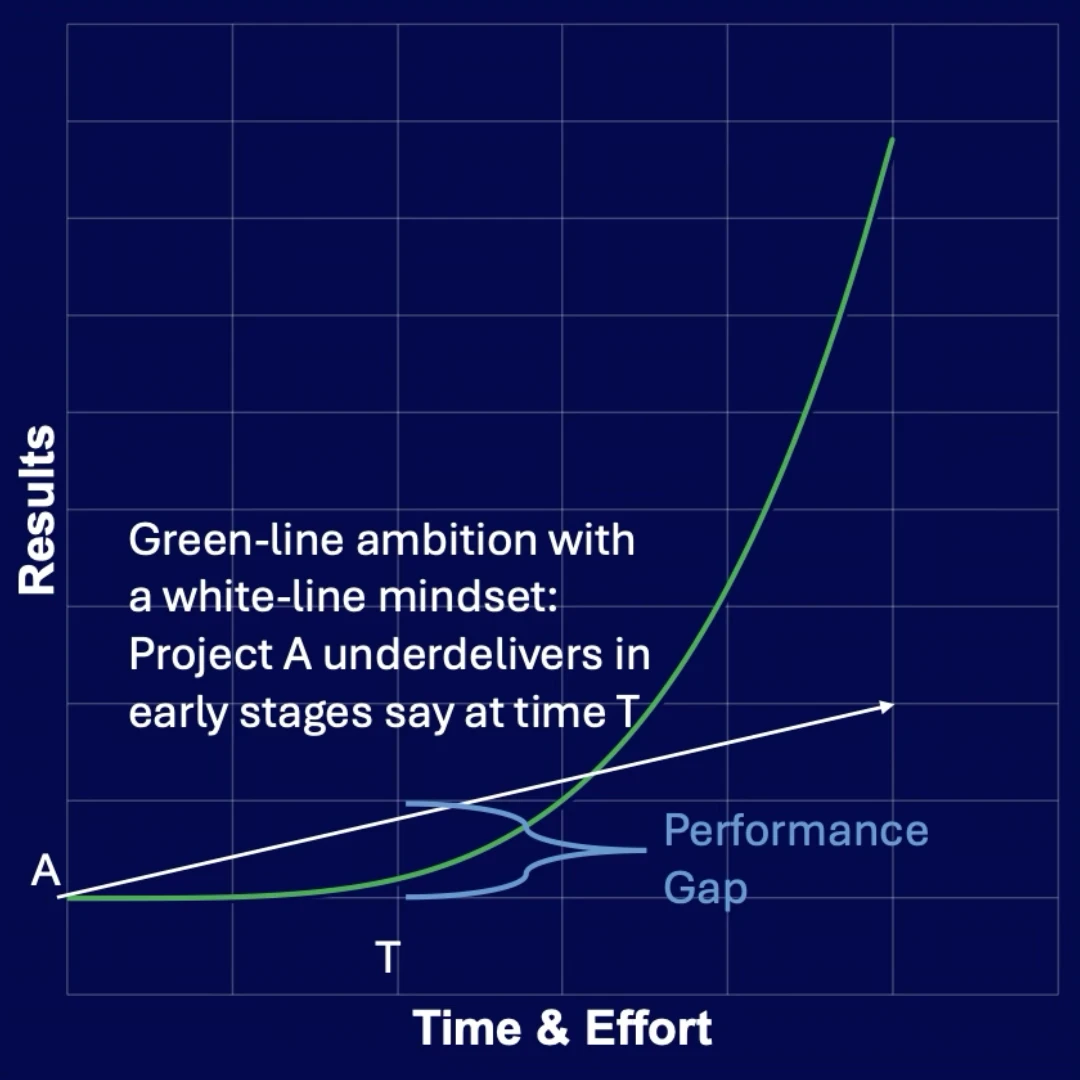
Figure 5: Green Line – White Line Dissonance
Such a mindset is fundamentally misaligned with the dynamics of data-centric strategies, which are characterized by delayed outcomes, high variance, and disproportionately large returns, what we have earlier termed the exponential trajectory. While digital technologies can certainly support incremental improvements, their transformative potential lies along the green line, which requires fundamentally different assumptions about time, risk, and value creation.
Herein lies a deep organizational irony: nearly every enterprise today aspires to be on the green line. The rhetoric of “unleashing the power of data” pervades corporate vision statements and transformation roadmaps. According to a McKinsey Global report, 89% of large companies worldwide are actively pursuing digital and AI transformation initiatives (McKinsey & Company, 2022). This statistic signals not only widespread adoption but also a near-universal ambition to capture exponential returns from data.
Yet, in practice, many of these same organizations remain anchored in linear thinking. They initiate transformations using conventional budgeting cycles, short-term KPIs, and low-risk governance frameworks, essentially attempting to chase the green line while operating along the white line. This dissonance produces two predictable outcomes:
First, organizations often overestimate short-term outcomes, and when early results fall short of expectations, these initiatives are prematurely deemed failures. Such perceived setbacks increase executive caution, discourage further experimentation, and reinforce a linear mindset—ultimately stalling progress towards exponential value creation.
Second, the long-term potential is frequently underestimated. As a result, high-risk, high-reward nature of exponential outcomes is rarely incorporated into investment evaluations. This leads companies to overlook or dismiss transformative opportunities, precisely where the real potential of data lies. By failing to recognize and plan for this exponential trajectory, organizations risk missing the core strategic advantage that data-centric strategies can offer.
The result is a self-perpetuating loop where the exponential potential of data remains largely untapped, not because the technologies are unproven, but because organizational mindsets and structures are not calibrated to harness them. This paradox becomes especially salient when examining real-world cases. In subsequent parts of this article, we turn to two such examples, Michelin and McDonald’s, to illustrate how this tyranny manifests in practice and what it takes to escape it.
References
Manyika et al. (2011). Manyika, J., Chui, M., Brown, B., Bughin, J., Dobbs, R., Roxburgh, C., & Byers, A. H. (2011). Big data: The next frontier for innovation, competition, and productivity. McKinsey Global Institute.
Brynjolfsson & McAfee, 2017. Brynjolfsson, E., & McAfee, A. (2017). Machine, platform, crowd: Harnessing our digital future. W. W. Norton & Company.
Metz, C., & Isaac, M. (2024, September 27). OpenAI’s latest funding round raises questions about its future. The New York Times.
